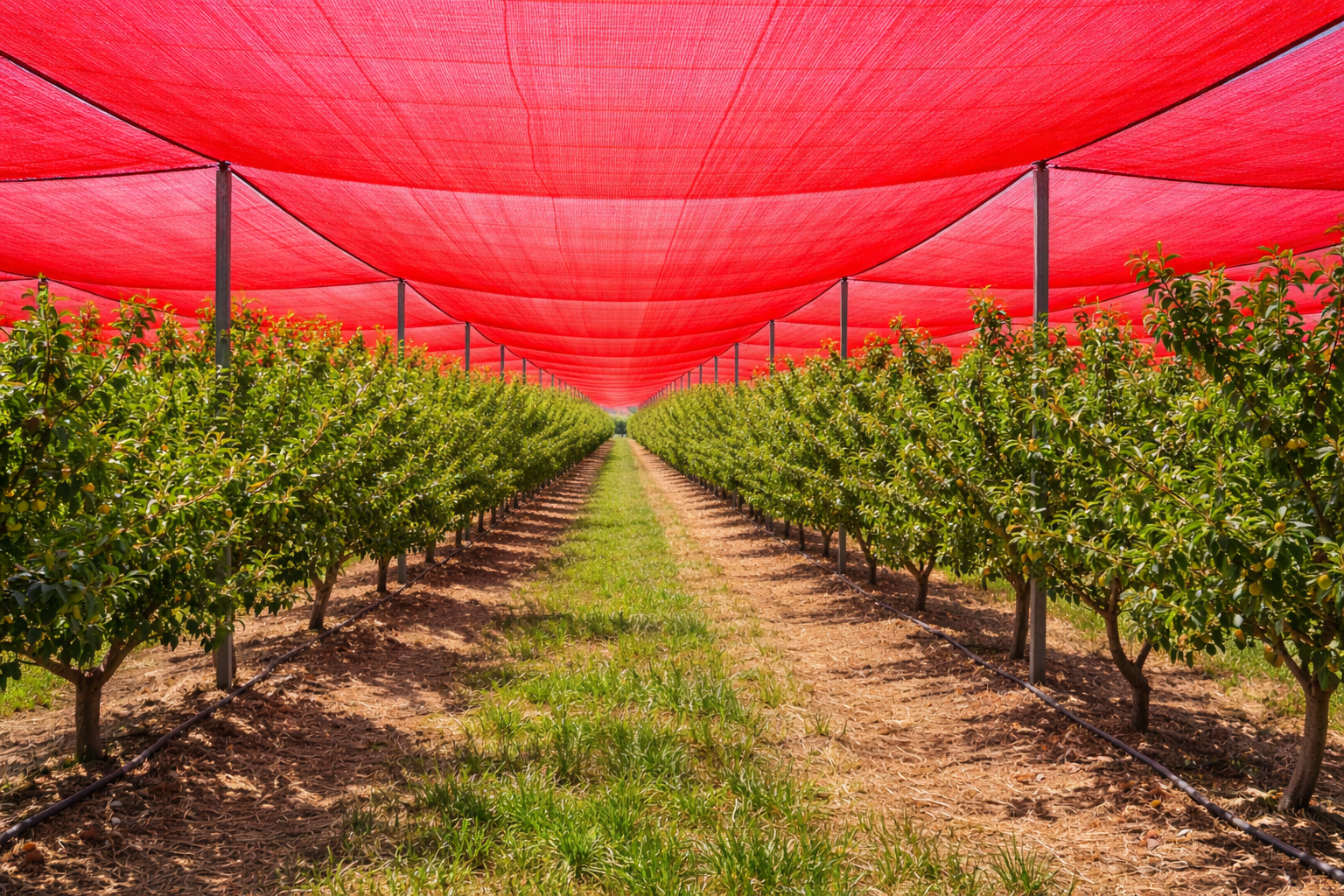
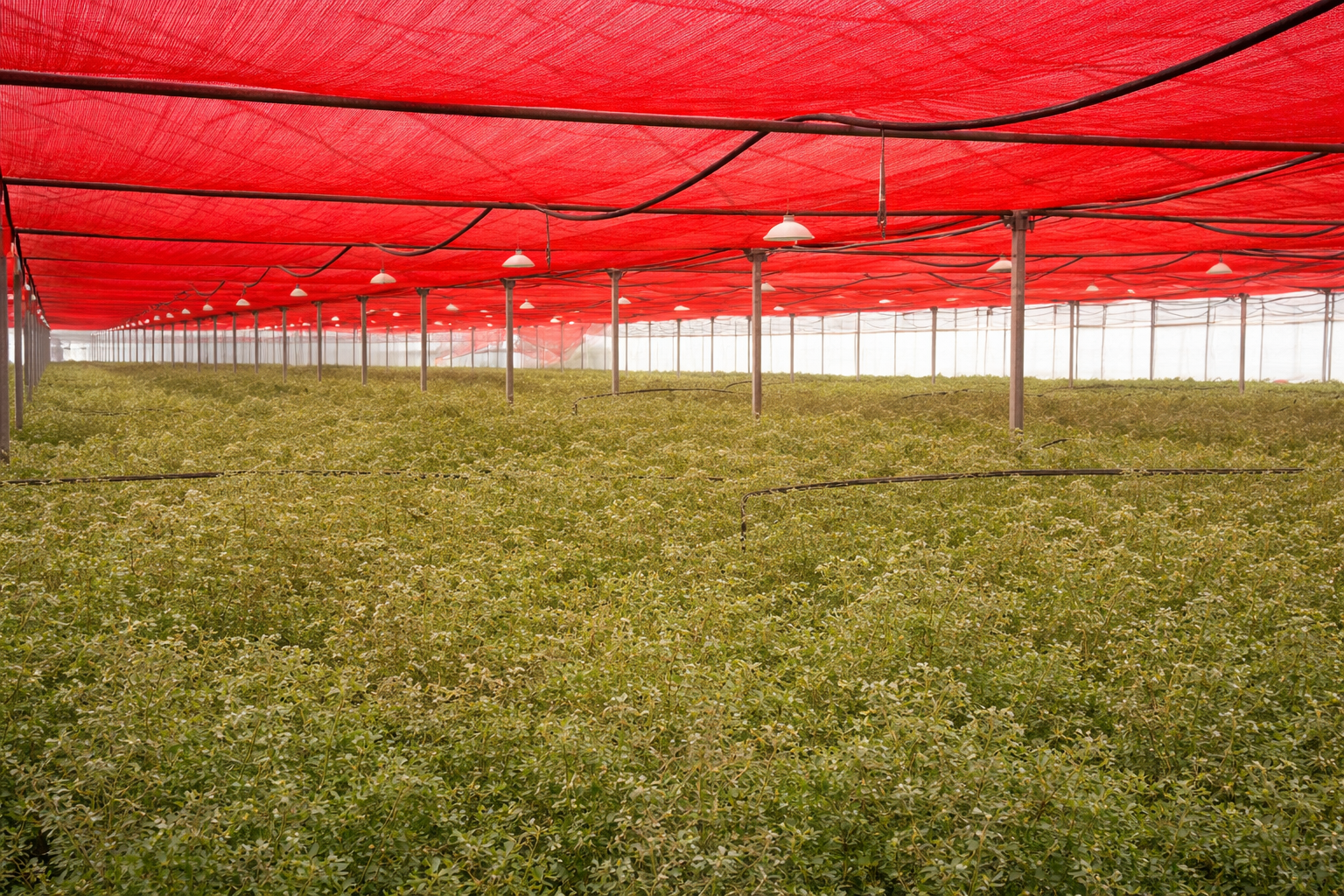
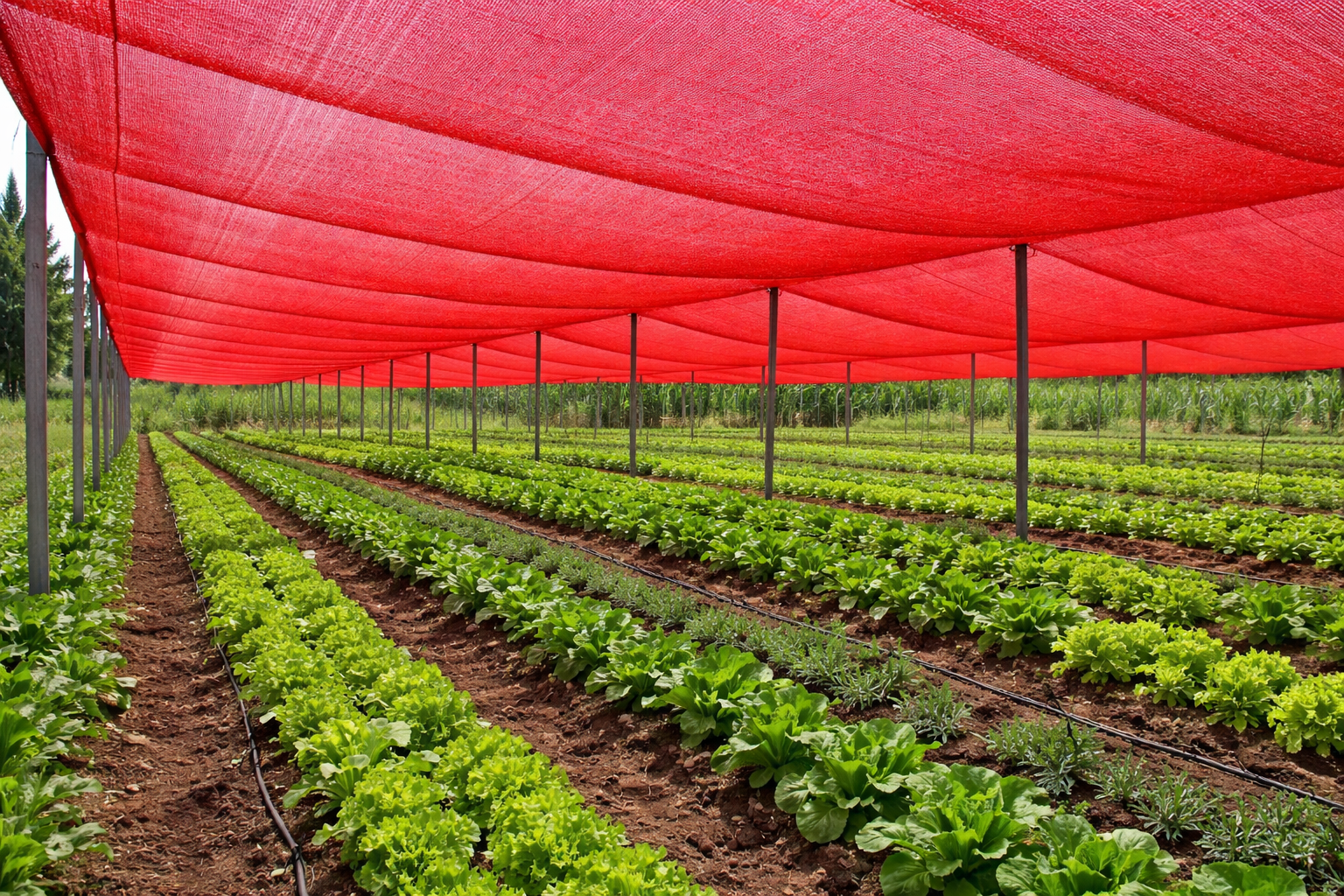
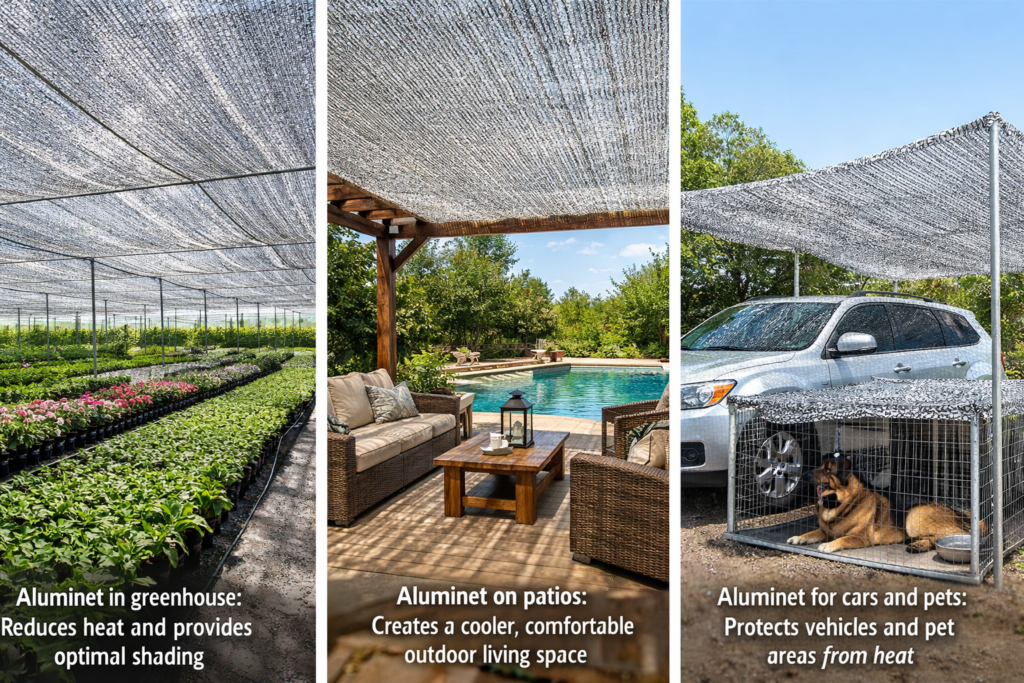
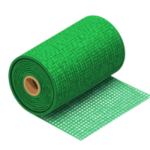
When your goal is to increase production, reduce heat stress, and enhance fruit color (especially in crops such as apples, grapes, and cherries), red shade netting—also known as photo-selective red netting—is one of the most effective tools for managing sunlight in both protected and open-field systems.
Unlike conventional shade cloth that primarily reduces light intensity, photo-selective netting is designed to filter and shift the light spectrum and often increase diffuse light, which can support improved plant physiology (vigor, canopy development, flowering, fruit set, and fruit quality) depending on the crop, variety, and climate.
What Is Red Photo-Selective Shade Netting?
Red photo-selective shade netting is an agricultural covering engineered to:
Filter specific wavelengths of sunlight
Increase diffuse light, improving light penetration within the canopy
Create a more stable microclimate by reducing excessive radiation and heat load
Note: Red nets are available in different shade factors (commonly ranging from moderate to high shading, including 70–80% options). Selecting the right shade factor depends on local radiation levels, temperature, crop type, and production goals.
Key Benefits in the Field: What Often Improves and Why
1) Higher Yield and More Marketable Fruit
Photo-selective nets can contribute to improvements in yield and/or fruit quality by optimizing the light environment and moderating heat stress. Results vary by crop and location, but many growers adopt red nets to support more consistent performance during high-radiation periods.
2) Improved Color Development (Apples, Grapes, Cherries)
Light quality and intensity influence pigment formation and ripening. By adjusting the spectral environment and moderating canopy temperature, red photo-selective nets may help improve color intensity and uniformity, particularly where excessive heat and direct sun negatively affect appearance and finish.
3) Reduced Heat Stress and Greater Crop Stability
By providing shade and lowering the thermal load, red nets can reduce physiological stress, helping plants maintain better function during hot conditions. This can translate into healthier canopies and more stable production, especially in warm seasons.
4) Targeted Physiological Responses Through “Photo-Selection”
Photo-selective nets are used to influence specific plant responses by modifying the spectral balance and often increasing diffuse light. In practical terms, this may support outcomes such as improved vegetative growth, earlier or stronger flowering, and enhanced fruit development—depending on species and management.
Crops Commonly Suited to Red Shade Netting
Fruit Crops (Color and Quality Focus)
Apples, grapes, cherries: commonly selected when growers prioritize color development, uniformity, and protection against excessive radiation.
High-Value Vegetables (Yield and Plant Health)
Greenhouses, Nurseries, and Propagation
Useful for germination, root initiation, and young plant development by reducing harsh radiation, lowering evaporation, and supporting a more uniform environment.
Ornamentals (Flowering and Growth Responses)
Added Protection: More Than Shade
In addition to spectral and microclimate benefits, agricultural nets are commonly used to help protect crops from:
Choosing the Shade Factor (Including 70–80% Options)
Although 70–80% shade may be appropriate in very high-radiation environments or in sensitive production stages, photo-selective nets are also available in lower shade factors where the goal is to preserve more light while still gaining spectral and diffuse-light benefits.
General guidance (always validate for your climate and crop):
20–35% shade: when you want protection and quality improvements without significantly reducing light
40–60% shade: a common range for balancing light and temperature in warm seasons
70–80% shade: for extreme conditions or highly sensitive stages—use carefully to avoid limiting photosynthesis due to insufficient light
Best practice: select shade percentage based on measured solar radiation and temperature, plus the crop’s variety and growth stage.
Installation: Six Best Practices for Performance and Longevity
Maintain uniform tension to prevent sagging and tearing
Set appropriate height: more clearance improves airflow; lower height increases shading effect (but may raise humidity)
Use proper anchoring and structure based on local wind conditions
Reinforce edges and friction points, where damage is most common
Consider modular installation if shading is seasonal (removable panels can help)
Monitor performance early (first 2–3 weeks) and adjust irrigation and ventilation as needed
Materials and Durability
Red shade nets are commonly manufactured from UV-stabilized high-density polyethylene (HDPE) designed for long-term outdoor exposure. Actual service life depends on UV intensity, mechanical tension, wind load, and maintenance practices.