90% Shade Cloth: Maximum Sun Blocking, High Privacy, and Heavy-Duty Protection (Uses & Benefits Guide)

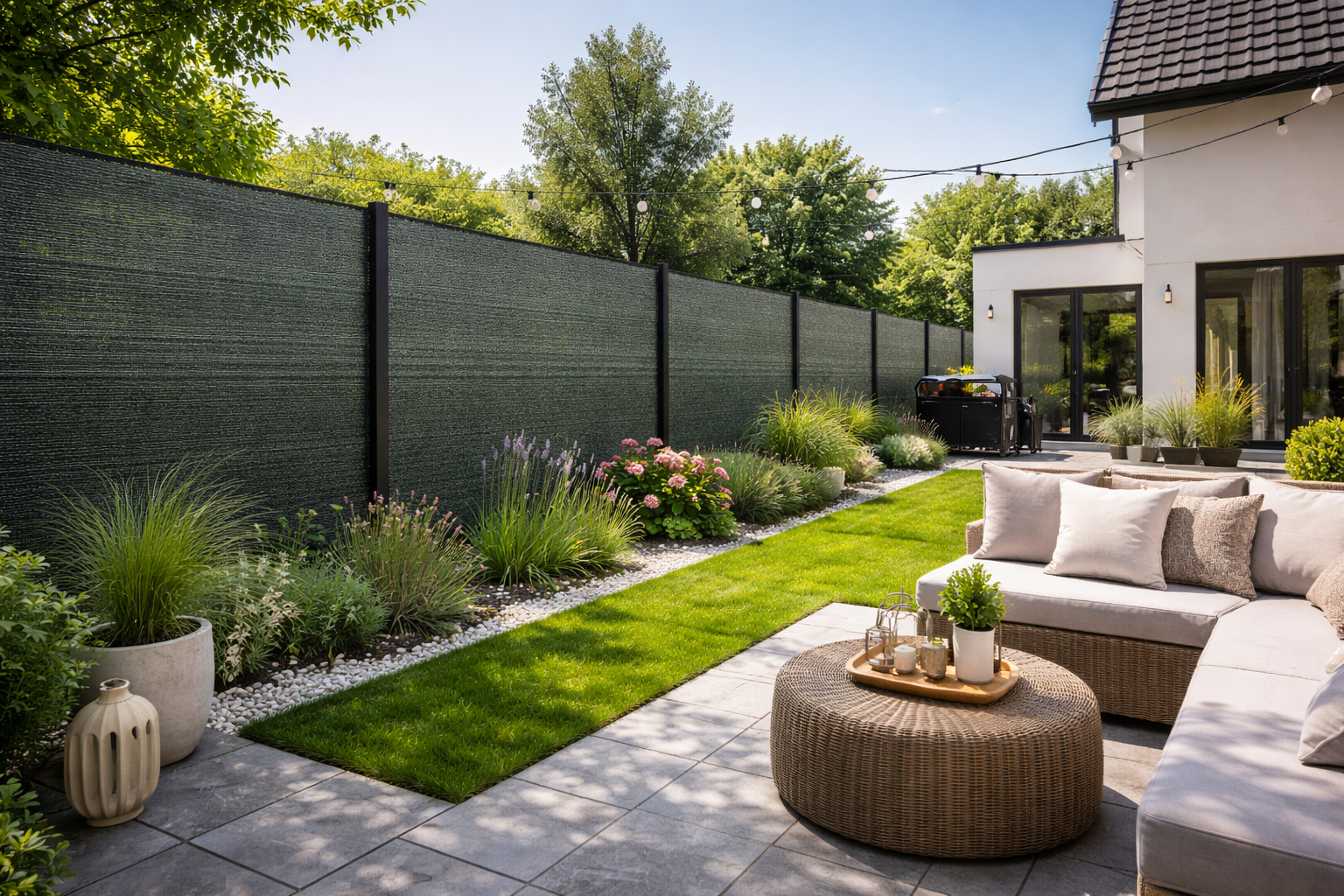
If you need a solution that delivers deep shade, high privacy, and serious sun protection, 90% shade net fabric is one of the most effective and versatile options available. Designed to block more than 90% of sunlight, this high-density material helps create cooler, more secluded, and better-protected areas—both in residential settings and in agricultural or industrial environments.
Below is a practical, website-ready guide explaining what 90% shade netting is, how it’s used, and what to look for when selecting and installing it.
What Is 90% Shade Net Fabric?
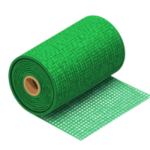
90% shade net fabric is a high-density, UV-stabilized mesh, typically manufactured from HDPE (high-density polyethylene), engineered to provide:
- Maximum sun reduction (over 90% shading)
- Significant privacy screening (strong visual blocking)
- Protection from extreme heat, glare, and direct exposure
- Airflow and drainage, thanks to its knitted/open structure
Unlike solid tarps or plastic covers, 90% shade fabric is generally breathable—it delivers heavy shade while still allowing air to move through, helping reduce heat buildup.
Key Uses for 90% Privacy Shade Nets
1) Privacy Screening for Fences, Balconies, and Patios
One of the most common uses is turning exposed spaces into private, comfortable areas without building permanent walls.
Ideal for:
- Chain-link fences
- Apartment balconies
- Patios and terraces
- Pergola side panels
Result: a more private outdoor “retreat” that also reduces sun exposure and glare.
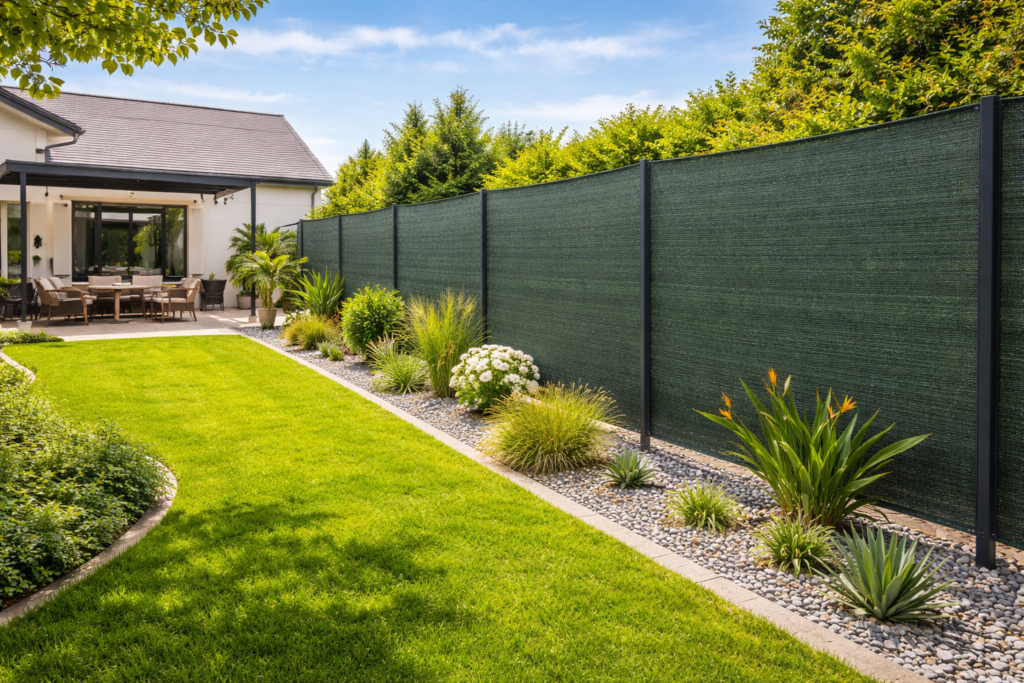
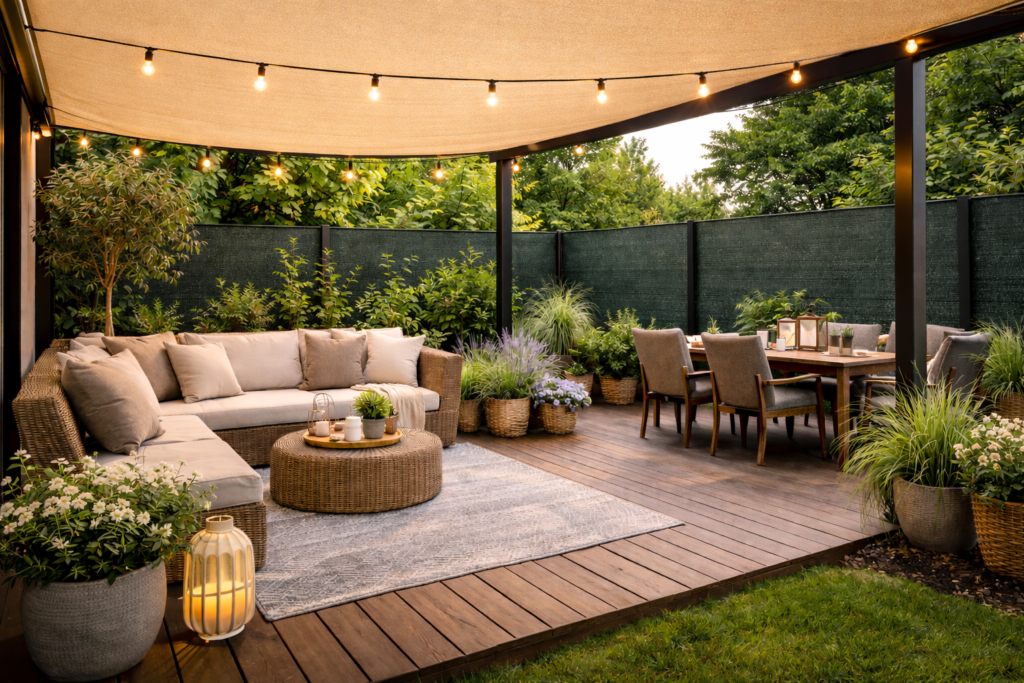
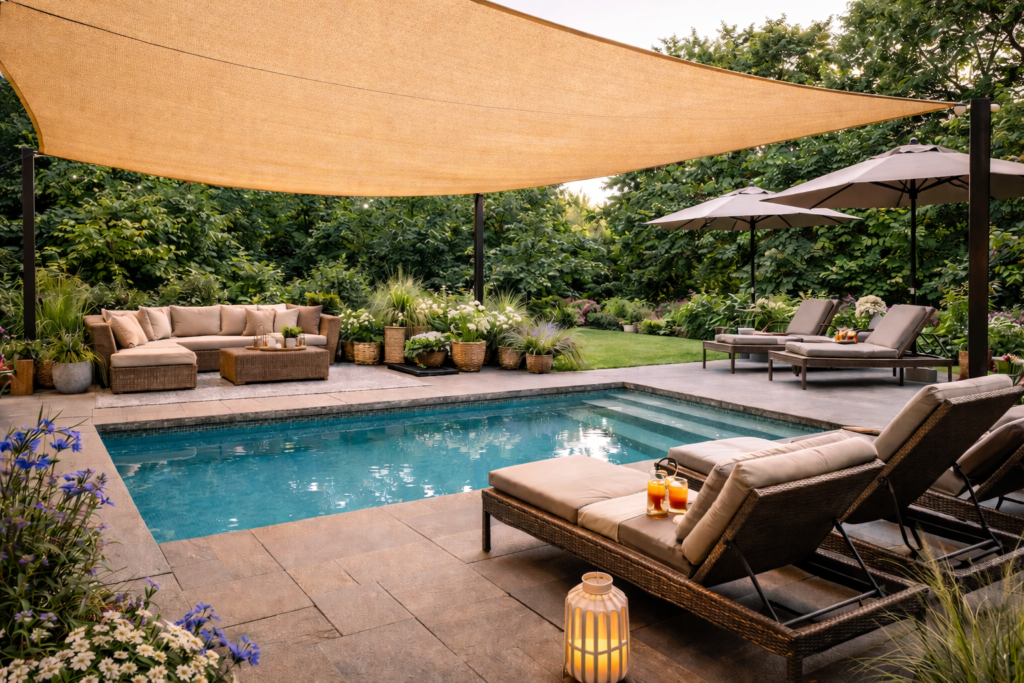
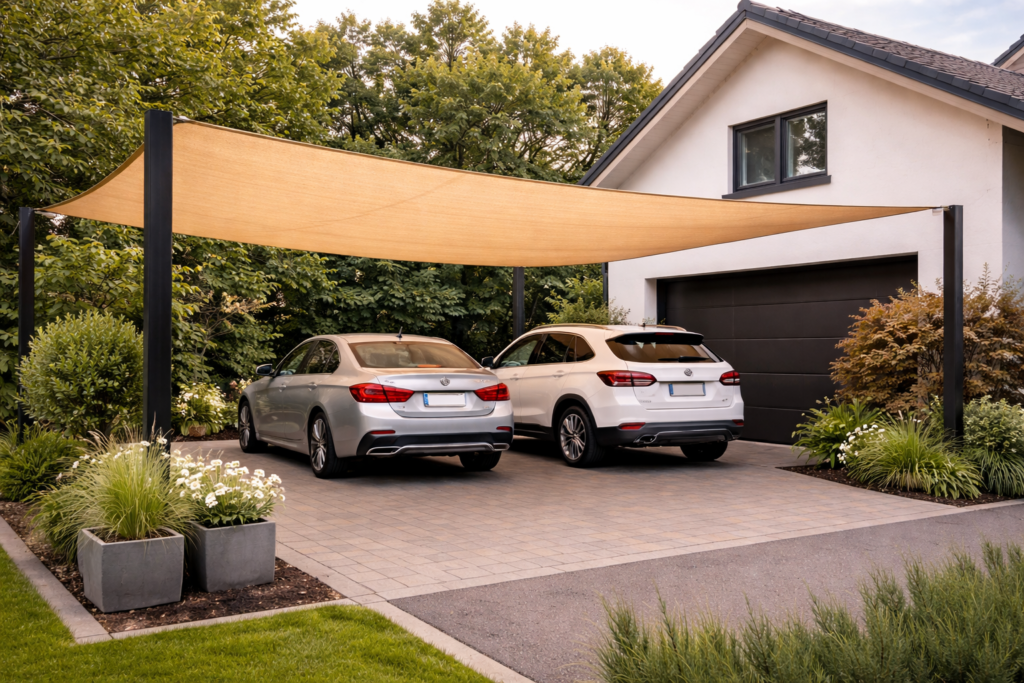
When the priority is serious shade (not light filtering), 90% shade netting performs exceptionally well. Common applications include: Pergolas and backyard decks Carports and driveway shade structures Pool areas and lounge spaces Outdoor seating or entertainment areas In addition to sun protection, it reduces glare and can make outdoor areas more usable during peak daylight hours. In hot climates—or for species that require heavy shade—90% netting is widely used in propagation and nursery production. Frequently used for: Orchids Ferns Shade-loving ornamentals Young plants during acclimation Typical benefits: Reduced sun scorch and leaf burn Lower water stress due to reduced evaporation More stable microclimate for sensitive plants Note: For full-sun crops or high-light production, 90% shade may be excessive. Shade percentage should match the crop and growth stage. Heat can significantly affect animal welfare and performance. 90% shade cloth provides large shaded areas while maintaining ventilation. Common uses: Shade for livestock pens and feeding areas Chicken coops Dog kennels and pet enclosures Because it blocks intense sunlight but still allows airflow, it helps reduce heat stress more effectively than many solid covers. On job sites, 90% shade netting serves both protective and privacy purposes. Applications include: Scaffolding and building facades Temporary site fencing Windbreak screens Dust and sun shielding in work zones It can also improve site appearance by partially concealing materials and activity from public view. UV-stabilized HDPE is designed for long-term outdoor exposure, offering strong resistance to sun damage and wear. The knitted structure allows: Air circulation (reducing trapped heat) Rainwater to pass through (preventing pooling and sagging) Higher-quality products often include: Reinforced hems Strengthened corners Heavy-duty perimeter stitching or binding tape Most 90% shade nets are available with: Grommets (metal eyelets), and/or Rust-resistant buckles/fasteners (depending on the model) These features make attachment straightforward on fences, posts, and structural frames. Before purchasing, define: Primary goal: privacy, shade, animal protection, nursery shading, or construction screening Area size: measure length/height and allow extra material for proper tensioning Wind exposure: stronger winds require better reinforcement and anchoring Attachment method: grommet spacing, straps, tension cables, UV-rated ties, etc. Color selection: darker colors often provide stronger privacy; lighter/reflective options may feel cooler (depending on product design) Install with consistent tension to reduce flapping and stress points. Use UV-rated zip ties, rope, or proper tension hardware—avoid unprotected wire contact that can cut the fabric. Reinforce corners and anchor points with appropriate fittings. Allow slight slack for thermal expansion/contraction, but avoid sagging. For fences, consider top and bottom tension cables to distribute load evenly.2) Residential Shade and Outdoor Comfort
3) Horticulture, Nurseries, and Gardening (Light-Sensitive Plants)
4) Livestock and Animal Protection (Heat Stress Reduction)
5) Construction, Safety, and Environmental Control
Key Features of a High-Quality 90% Shade Net
✅ High Density + UV Resistance (HDPE)
✅ Breathable and Drainage-Friendly
✅ Reinforced Edges for Longer Service Life
✅ Easy Installation Hardware
How to Choose the Right 90% Shade Net (Quick Checklist)
Installation Tips (For a Clean Look and Better Durability)